
A commercial kitchen floor leaks because water gets through worn grout, cracked tile and the joint where the floor meets the wall, then soaks into the slab and the ceiling below. The way to stop it for good is to stop patching the tile and cover it with one seamless, waterproof floor that turns up the wall, so there is no joint left for water to find.
If your kitchen sits above guest rooms, a ballroom, a dining room or another kitchen, you usually find out from the people downstairs. A brown stain shows up on their ceiling, then another, and every repair upstairs seems to buy a few weeks before it starts again.
This guide explains where the water gets in, why patching rarely holds, and how a seamless floor laid over your existing tile ends the problem in a single night.
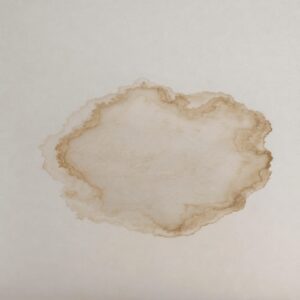
A stain on the ceiling below is often the first sign that the kitchen floor above is leaking.
Why commercial kitchen floors leak
A kitchen floor takes more water than almost any floor in a building. It is mopped every night, hosed down after service and soaked by spills, steam and hot water all day. Tile and grout were never one solid surface, so the water has plenty of ways in.
Grout wears away
Grout is porous. Hot water, degreasers and daily scrubbing slowly wear it down until the lines sit lower than the tile, then crack and wash out. Once the grout is gone, water runs straight under the tile and into the bed below it.
Tiles crack and come loose
Heavy carts, dropped pans and equipment being dragged across the floor crack quarry tile over time. A cracked tile is an open gap. A loose one rocks underfoot and breaks the bond around it, so the gap gets wider every week.
The edges and the drains
Water collects at the low points of a kitchen floor, which are the edges and the drains. That is exactly where tile meets something else: the wall, the base, the drain body. Those joints open first, and they are the hardest to keep sealed.
What a leaking floor costs you
The damage you can see upstairs is the small part of it. Water that gets under the tile keeps the slab damp, which can bring odors and mold, and it spreads to whatever sits below: stained or sagging ceilings, closed rooms and unhappy guests or diners. Upstairs, the same cracks and loose tiles are a slip risk for your staff and a likely finding at your next inspection.
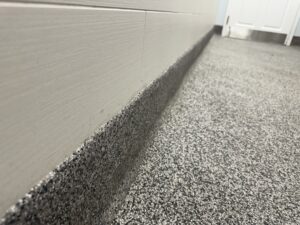
One seamless floor, turned up the wall, leaves water no joint to get through.
Why patching tile rarely holds
Regrouting and swapping out broken tiles fix the spot you can see. The rest of the floor is the same age, under the same water and the same traffic, so the next crack opens a few feet away. Every patch also means closing part of the kitchen, waiting for the grout to cure and doing it again a few months later. Sealers help for a while, but they sit on top of the grout and wear off the same way.
How to stop the leak for good: one seamless floor
The lasting fix is to take the joints away. A seamless resin floor is poured as one continuous surface, with no grout lines, and it runs up the wall as a base, so the edge where most leaks start is gone.
What JetRock is
JetRock is the quartz and epoxy flooring system Feature Flooring installs. It goes down in one layer of about 3/16 of an inch, directly over the floor you already have, including quarry tile. Its base turns up the wall, so the floor and the base are one piece. It is nonporous and solvent free, so no VOCs are released into your kitchen.
How the overnight install works
Because JetRock is laid over the old tile, there is no demolition and no week-long shutdown. A typical night looks like this:
- Equipment out: your kitchen or bar equipment comes off the floor, and a trusted partner can take it down and set it back up so the job is turnkey.
- The floor is prepared: the existing tile is readied for the new layer.
- JetRock goes down: one seamless layer across the floor and up the wall into the base.
- It cures: the floor is ready to walk on in about 6 hours, so your kitchen opens on time the next day.
- Care walkthrough: we show your team how to clean and care for the floor and send a free cleaning solution and tools.
What you get
When the work is done, the floor that used to leak is gone, and in its place you have:
- No grout lines: nothing left for grease, bacteria or water to sink into.
- A base that turns up the wall: no joint where the floor meets the wall.
- A waterproof, non slip surface: made for wet, greasy kitchens and easy to clean.
- No lost days of service: installed overnight, ready in about 6 hours.
- A 2-year warranty: every floor is backed by a 2-year warranty.
For hotels, casinos and kitchens above other spaces
A leak in a hotel or casino kitchen rarely stays in the kitchen. It reaches guest rooms, ballrooms, restaurants and back offices, and the people who notice first are often guests. That is why back-of-house floors need to stop water completely, and why the work has to happen without anyone out front noticing.
An overnight install fits that. The kitchen closes after the last service and is ready to walk on in about 6 hours, so the next day runs as normal. Feature Flooring has installed more than 3.5 million square feet of floor for names like Marriott, Hilton and Dave & Buster’s, and it has dedicated pages for hotels and casinos and for restaurants and bars, including restaurants on upper floors.
If water from your kitchen is reaching the floor below, the sooner the joints are gone, the less there is to repair underneath. Get a Free Floor Assessment and we will tell you whether your kitchen can be done in a single night.
Call Feature Flooring at (410) 679-6340 for a free floor assessment anywhere in Baltimore and the Mid-Atlantic.
Frequently asked questions
Will a seamless floor stop water leaking into the floor below?
Yes, when the water is coming through the kitchen floor itself. A seamless floor has no grout lines and turns up the wall as one piece, so the gaps where water used to get through are covered over. If the water is coming from a pipe or a drain line instead, that needs fixing first.
Can epoxy go right over my cracked quarry tile?
Yes. JetRock is laid directly over existing floors, including quarry tile, so there is no tear-out. The old tile stays underneath, and the new seamless floor goes on top of it.
How long will the kitchen be closed?
One night. JetRock goes down overnight and is ready to walk on in about 6 hours, so a kitchen that closes after dinner service can open the next day.
Is an epoxy kitchen floor slippery when it’s wet?
JetRock is made to keep its grip in wet, greasy kitchens. No floor can promise that nobody will ever slip, so keeping it clean the way we show you after the install is part of keeping it safe.