
Commercial Kitchen Flooring Options: The Top Choices for Active Restaurant Kitchens
If you’ve ever walked into a restaurant kitchen and thought, “This floor is a problem,” you’re probably right. Commercial kitchens are brutal environments. Between heat from the line, constant water and chemicals, grease everywhere, and equipment that never stops moving, floors get punished every single day.
When the wrong system is installed, it doesn’t fail quietly. It cracks, gets slippery, traps bacteria, fails inspections, and eventually shuts the kitchen down when you can least afford it.
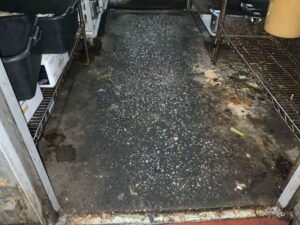
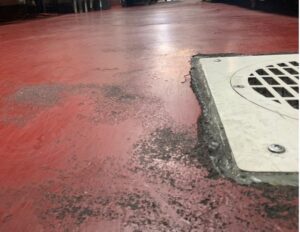
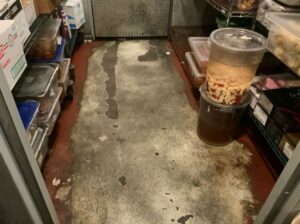
We spend our days installing, repairing, and replacing kitchen floors that were supposed to “hold up.” Some do. A lot don’t. The difference usually comes down to choosing the right material for how the kitchen actually operates and not how it looks on paper or how good it sounds during a rushed build-out.
This guide breaks down the most common commercial kitchen flooring options and how they perform in the real world.
- Durability
- Slip resistance
- Sanitation
- Heat and moisture tolerance
- Maintenance
- Lifespan
- Installation downtime
The goal isn’t to sell you on a buzzword. It’s to help you pick a floor that survives your kitchen, passes inspection, and doesn’t turn into a costly problem a few years down the road.
What a Commercial Kitchen Floor Must Be Able to Handle
Before you even start comparing flooring types, you have to understand what a commercial kitchen floor actually goes through. A lot of systems sound like they should work. In real kitchens, most of them get exposed pretty quickly.
Sanitation
Sanitation is the big one when it comes to commercial kitchen flooring requirements. Health inspectors are not looking at brand names or marketing claims. They’re looking for floors that can be cleaned thoroughly, day after day, without seams opening up, grout breaking down, or moisture getting trapped underneath.
Slip Resistance
Slip resistance is just as critical. Kitchens are wet constantly, and floors must provide traction when dirty and greasy.
Thermal Resistance
Commercial kitchens don’t ease into temperature changes. Floors that can’t handle thermal shock crack and delaminate over time.
Chemical and Moisture Resistance
Degreasers, sanitizers, and harsh cleaners are part of daily life in a kitchen.
Durability
Commercial kitchens are full of rolling equipment, dropped tools, heavy racks, and constant impact.
Cleaning Frequency
Floors need to be easy to clean fast, repeatedly, without special procedures.
Downtime
Install time and cure time can make or break a project.
The Main Flooring Types to Consider in a Restaurant Kitchen

Quarry Tile
Quarry tile has been a staple in commercial kitchens for decades because it’s dense, durable, and handles constant foot traffic without wearing down. When textured, it offers decent slip resistance and can last a very long time if the space stays relatively dry and temperatures remain stable.
Its drawbacks are always the same: grout lines. Grout absorbs moisture, traps grease, collects bacteria, and gradually breaks down from daily chemical cleaning. As grout weakens, tiles loosen, crack, or sink, allowing water to migrate underneath the floor. Quarry tile also struggles with thermal shock near fryers, ovens, and dish pits, which is why it often fails in the highest-stress parts of a kitchen. It works best in lower-moisture prep areas and spaces without aggressive heat swings.
Estimated Lifespan: Individual tiles may last decades, but grout lines typically fail much sooner. Many kitchens end up regrouting or replacing cracked tiles annually, which increases long-term cost.
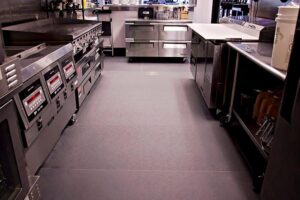
Vinyl (Commercial-Grade Sheet Vinyl)
Sheet vinyl is soft underfoot and easy on staff during long shifts. It installs in large sheets, which reduces the number of seams and creates a more comfortable walking surface. In some light-duty spaces, it can perform well enough.
But vinyl isn’t built for commercial kitchen conditions. Heat, dropping pans, heavy equipment, and constant moisture weaken the seams and adhesives. Once water or grease gets into those seams, the floor begins to bubble, separate, or discolor. It also becomes very slippery when wet, even with surface texture. Vinyl is best reserved for areas outside the active cook line, and not anywhere near fryers, dish stations, or steam.
Estimated Lifespan: Shorter lifespan in BOH kitchens due to seam failures and moisture intrusion. Often needs replacement in 3–7 years, depending on wear.
Epoxy Systems
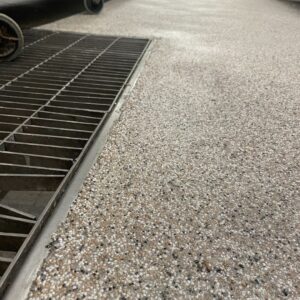
Epoxy is popular because it’s seamless, easy to clean, and fast to install , but not all epoxy systems are created equal. Standard broadcast epoxy is known for failing in high-heat, high-grease environments because it cannot withstand thermal shock or high amounts of moisture( the rapid temperature swings caused by hot pans, boiling water, or steam). These swings cause cracking, peeling, or delamination over time.
Higher-grade slurry-like systems, for example JetRock, perform better because of the thickness of the system at 3/16th’’, but even then, epoxy should be chosen carefully based on the environment. Where epoxy works:, dry storage, coolers, prep areas, dish rooms, pantries, service areas or bars. Where it often fails: is if the epoxy is installed over a bad substrate that might have moisture or leaks that can cause problems in areas where heat is common. Epoxy is very temperamental with the environment that it’s installed in so it’s important to get someone with knowledge to install it.
Estimated Lifespan: Typically lasts 10–15 years, provided it’s cleaned properly and used in environments it’s designed for. Seamless, non-porous, and very resistant to kitchen abuse.
Urethane Cement Systems
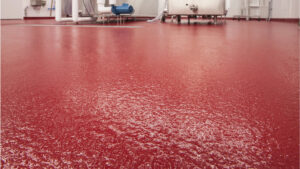
Urethane cement is widely viewed as one of the most dependable flooring systems for commercial kitchens because it holds up to the conditions that typically destroy other materials; heat, grease, constant moisture, chemicals, impacts, and aggressive daily cleaning. It also handles thermal shock exceptionally well and provides a seamless, sanitary surface with long-term slip resistance.
The tradeoff is installation time. Urethane cement isn’t a single-layer system; it relies on multiple layers working together with a primer for bonding, a build coat to level and accept the broadcast, the broadcast for traction, and a topcoat for durability and thermal protection. Each layer has its own cure time, which means even small repairs or touch-ups can take longer than operators might expect. And like any system with a protective topcoat, performance can decline if that layer wears down and isn’t maintained.
Estimated Lifespan: Often exceeds 15 years, even in extreme conditions. The gold standard for thermal shock, moisture, and chemical resistance.
Concrete Flooring
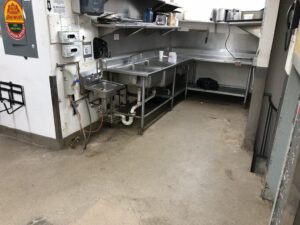
Bare or polished concrete is extremely durable and can hold up to heavy equipment, carts, and impacts. With the right grit and coating, it can also look clean and modern. But concrete is naturally porous, which means it absorbs water, bacteria, and odors unless sealed. When left uncoated, it often fails health inspections.
Concrete also becomes slick when wet and is challenging to keep sanitary without additional treatments. In hotter or wetter areas, sealed or epoxied concrete may degrade and require frequent rework. Concrete works best in dry, non-critical zones or when used as a substrate for a more robust flooring system.
Estimated Lifespan: Structurally long-lasting, but surface failures (porosity, slipperiness, staining, coating breakdown) limit hygiene and performance. Lifespan is highly variable.
Rubber Flooring & Other Niche Options
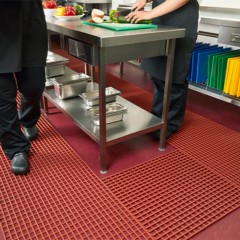
Rubber and other specialty materials occasionally appear in small food-service spaces, usually because they’re soft, comfortable, and offer good traction. But they’re not designed for the daily heat, grease, and sanitation demands of a commercial kitchen. Seams can curl, moisture can get underneath, and chemical resistance is inconsistent at best.
These systems can be useful in ancillary areas like mop rooms or low-heat prep spaces, but they are rarely suitable for BOH kitchen environments where safety, sanitation, and longevity are non-negotiable.
Estimated Lifespan: Comfortable underfoot but not designed for heavy heat or grease. Lifespan varies and is typically shorter than high-performance resin systems.
How to Choose the Right Floor for Your Kitchen Environment
Choosing the right flooring isn’t about picking the “best” material on paper. It’s about choosing the material that holds up to your kitchen’s heat levels, moisture load, cleaning routine, and daily wear. Every kitchen operates differently, and the wrong choice usually fails for predictable reasons.
Below are the most common kitchen environments and the flooring characteristics each one actually needs.
High-Heat Cook Lines (Fryers, Griddles, Ovens, Ranges)
These areas see intense thermal shock from hot pans, boiling liquids, and steam, often dropped directly onto the floor. Grease is constant, and equipment movement adds impact stress.
What you need:
- Extreme thermal-shock resistance
- Slip resistance even when greasy
- Seamless, grout-free sanitation
- Resistance to chemicals and degreasers
Best fits: Urethane cement, JetRock epoxy
High failure rate: Standard epoxy, vinyl, tile
High-Moisture Areas (Dish Pits, Wash Stations, Prep Sinks)
Water is constant here, often hot and mixed with detergents, sanitizers, and chemicals. Floors stay wet for hours and experience heavy foot traffic.
What you need:
- Absolute moisture resistance
- Seamless surface to prevent bacteria in crevices
- Strong bond to subfloor (no peeling or hollow spots)
- Slip resistance in standing water
Best fits: Urethane cement, JetRock epoxy
High failure rate: Vinyl seams, tile grout, bare concrete
Mixed-Use Kitchens (Typical Restaurants, Fast Casual, Cafeterias)
Most commercial kitchens fall into this category. A combination of prep, cook, storage, dish, and cooler areas. Each zone stresses the floor in different ways.
What you need:
- A system that performs consistently across hot, cold, wet, and dry zones
Low maintenance and long-term durability - Strong sanitation and daily cleaning resilience
Best fits: JetRock epoxy or urethane cement
High failure rate: Vinyl, tile in wet or hot areas
Large Production Kitchens (High Volume, Long Shifts, Heavy Equipment)
These environments run nonstop and use large carts, racks, and machinery that increase impact and abrasion. Steam and hot water cleaning intensify thermal shock.
What you need:
- Maximum durability and chemical resistance
- Seamless, industrial-grade system
- Resistance to heavy rolling loads and impacts
- Fast-cure options to minimize downtime
Best fits: Urethane cement
High failure rate: Tile, vinyl, standard epoxy
Small Restaurants With Limited Downtime
Smaller kitchens often can’t afford to shut down for multiple days. They also need a floor that improves safety without increasing maintenance workload.
What you need:
- Fast installation
- Long lifespan
- Slip resistance and easy cleaning
- Compatibility with existing subfloors
Best fits: JetRock epoxy
High failure rate: Tile replacements, multi-day vinyl installs
Cold Storage, Coolers, and Freezers
Cold storage areas require flooring that bonds well at low temperatures and resists moisture migration and condensation.
What you need:
- Slip resistance in cold/wet environments
- No seams that can crack under temperature swings
- Thermal shock resistance when transitioning in/out
Best fits: JetRock epoxy, urethane cement
High failure rate: Vinyl, tile
Installation, Downtime, and What to Expect During Replacement
When replacing a commercial kitchen floor, most operators are balancing safety and long-term durability with the reality that every hour offline costs money. Understanding the installation process and cure time helps you choose a system that fits your schedule.
Surface Prep Is the Biggest Variable
Before any new floor is installed, the existing surface must be properly prepared. That may include removing loose tile, grinding down high spots, repairing cracks, degreasing porous surfaces, or addressing moisture trapped under older flooring.
If the substrate is in poor condition, expect the timeline to extend. Prep is almost always the longest part of the project.
Curing Times Dictate When You Can Reopen
The material you choose determines when your staff can safely walk on the floor again.
- Quartz-blended epoxy systems like JetRock: Often fully installed and ready for use the next day, making them one of the fastest return-to-service options for active restaurants.
- Urethane cement: Slow curing, but timing depends on temperature, amount of layers required, and moisture conditions.
- Ceramic, quarry, or natural stone tile: Multi-day installations plus additional grout/sealant curing time.
- Vinyl: Multiple day installation with adhesives typically needing 24–48 hours to cure fully before equipment can return.
If minimizing downtime is a priority, systems specifically engineered for quick return offer a major operational advantage.
Cost Factors and Lifespan Expectations
The cost of a commercial kitchen floor depends far more on the environment and existing conditions than on the material alone. Every kitchen has unique challenges that influence both installation pricing and long-term performance.
What Drives Installation Cost
Substrate Condition
The biggest cost swing comes from what’s under the existing floor. Cracked concrete, saturated grout, loose tile, and moisture issues can require repairs, grinding, or leveling before a new system can bond properly.
Square Footage
Larger kitchens benefit from economies of scale, but high-intensity zones (cook lines, dish pits) often require thicker materials or additional layers that increase cost per square foot.
Drain Layout and Slope Work
Floors with multiple drains, trench systems, or uneven slopes require more prep and precision. Fixing an improper slope is one of the most time-consuming parts of a replacement.
Transitions and Obstacles
Cooler thresholds, doorways, equipment bases, and cut-in areas add complexity. Tight spaces often slow installation and increase labor.
Downtime Requirements
If the kitchen must reopen quickly, fast-curing systems (like JetRock or urethane cement) may carry a higher material cost, but they prevent lost revenue and reduce staffing disruption.
Work With a Commercial Kitchen Flooring Expert
Commercial kitchens are some of the harshest environments you can build a floor for. Heat, grease, moisture, chemicals, constant cleaning, and nonstop traffic expose every weakness in a flooring system. The difference between a floor that lasts a decade and a floor that fails in a year almost always comes down to two things:
Choosing the right material, and having it installed by people who understand exactly how your kitchen operates.
There’s no one-size-fits-all solution. A high-heat cook line needs something different than a dish pit. A small restaurant with limited downtime needs something different than a production facility running 18 hours a day. The best system is the one tailored to your layout, your equipment, and your daily stress points.
That’s where experience matters.
Feature Flooring has worked inside kitchens of every size and condition — from small independent restaurants to high-volume institutional operations. We know where floors fail, why they fail, and how to prevent those failures before they happen. And with access to rapid-cure, commercial-grade systems like JetRock and urethane cement, we can help operators minimize downtime while maximizing long-term durability.
If you’re planning a replacement or evaluating your options, talk with a team that understands the realities of a working kitchen. A short conversation now can save thousands in repairs, shutdowns, and lost service later.
Ready to make the right choice for your kitchen? Let’s take a look at your space and walk through the options that will actually hold up.